How to Give a Good Tech Talk
Preface
A week ago, I received an assigned-topic talk from the organizers — “How to Give a Good Tech Talk”. To be honest, the content itself is not difficult; it is nothing more than my own thoughts and lessons learned. The difficulty of this topic lies in summarizing it into a methodology. I tried to organize my content from the perspective of educational psychology, and the result was not ideal.
On a sleepless night, it suddenly occurred to me that the software engineering lifecycle maps remarkably well onto “how to give a good tech talk”. This may be a brand-new version you have never seen before — allow me to explain in detail.
Feasibility Analysis
At this stage, we can roughly settle the direction of the topic. Feasibility mainly comes down to two things: preparation time and personal ability.
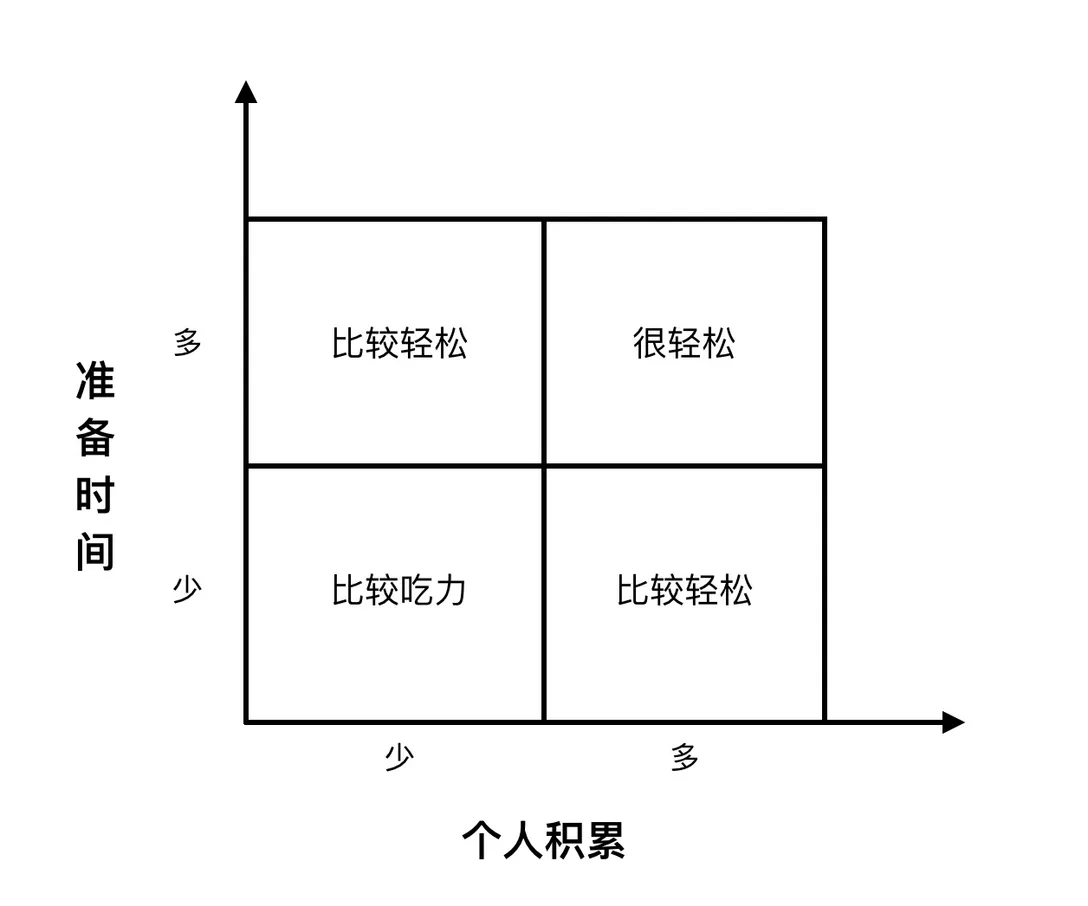
The topic of a tech talk is usually related to our daily work and study, yet a step above the everyday. Faced with the same relatively unfamiliar concept, a person with a lot of accumulated knowledge in the relevant field will obviously understand and digest it faster than someone without.
If you really want to share a particular topic, but you lack the relevant background and time is tight, what do you do? A good entry point can spare you this trouble.
If you have never studied operating systems and have to prepare “Linux Kernel Analysis” within a week, even if you do manage to pull a talk together, the result probably won’t be great. But if, with the same preparation time, you pick a much smaller angle — say, “The LRU Algorithm in Linux” — the quality of the talk should improve a lot.
If you still don’t know what to share, you can never go wrong following your interests. Interest is the best teacher, as they say, and you will have more motivation to prepare a topic you care about. Besides, China’s programmer community is so huge that whatever direction interests you is bound to have an audience just as interested.
Requirements Analysis
The audience is the core of a talk. The audience’s needs and roles set the direction for the content you prepare and the questions you need to consider.
If your audience is schoolkids who have just learned systems of linear equations in two variables, and you try to introduce calculus to them, that is obviously inappropriate. If instead the talk covers the “chickens and rabbits in the same cage” problem, that would clearly be more helpful to them at that stage. A talk is not about showing off; what matters is what the audience can get out of it.
Take the visual page editor our team recently built for the operations staff: in a talk for fellow front-end engineers, we would present our hands-on experience with techniques such as on-demand bundling and cross-page communication, whereas a talk for the operations team would not go into too many technical details and would look more like an introduction to the system’s features and functionality. If there were a chance to share it externally, we would also have to sanitize the content in accordance with the company’s confidentiality agreement.
Design
In the design phase, we need to consider the design of how the content is organized and the design of how it is presented. Design is good or bad depending on whether it can help the audience better take in the content of the talk.
Reduce Distractions
Make sure users spend their scarce, easily depleted cognitive resources on the right things. — 《用户思维+:好产品让用户尖叫》(User Thinking+: Great Products That Make Users Scream)
A person can handle about 7 ± 2 “chunks” of information at the same time; when the brain receives new information beyond its processing capacity, it starts to slow down or even abandon the task at hand. When preparing your materials, you should avoid long blocks of text and code, and make the key points stand out. If you use slides, keep the layout, colors, and transition animations consistent, so that the audience’s attention stays focused on the content itself — make sure they spend their scarce, easily depleted cognitive resources on the right things.
Simplicity
A picture is worth a thousand words.
A picture is worth a thousand words. A single image can sometimes describe the relevant content better than a long block of text. If one picture can make something clear, don’t begrudge the extra time it takes to make it — it will help the audience understand better.
Note, however, that images can also interfere with the audience’s understanding. If a picture contains too much content unrelated to the piece (usually the case when quoting someone else’s image), the picture itself becomes noise. Personally, I prefer to make my own illustrations: besides showing more sincerity, it actually cuts out a great deal of irrelevant noise and helps the audience take things in.
Opening, Development, Turn, and Conclusion
Outline
Opening and closing
Of the two numbers below, if the information they convey has nothing to do with order, which one is easier to remember:
- 4095281736
- 1234567890
A good structure is a great help to the audience’s understanding and memory. For example, when sharing a technology, you can organize your content along a structure like “what problem did it appear to solve”, “how does it solve the problem”, “how do you use it”, “what should you watch out for when using it”, and “where does it still fall short”.
Code highlighting, making keywords and key sentences stand out, and letting important points appear more than once. You can use conspicuous styles such as “highlighting” and “bolding” to make important code or key words and sentences stand out.
Implementation
Avoid Mistakes as Much as Possible
Avoiding mistakes as much as possible is, in my view, the most basic and most important point when preparing a talk.
While collecting material, you are very likely to find that different articles describe the same idea in contradictory ways. Screening out and verifying which information is correct is what being responsible to your audience looks like. And “tracing back to the source” is the most effective way to avoid mistakes.
Make the Content Valuable
Sharing knowledge is not mechanical input and output — that would be no different from copy-paste. The process should be input, internalization, then output; in other words, you first need to work the knowledge into something of your own. The act of sharing is showing others what you have worked out, and its value lies in “how you process the knowledge” and “what you end up turning the knowledge into”.
Hands-on Experience
Experience, especially the experience of failure, can be more valuable than the technology itself. Your experience lets others stand on your shoulders — no matter how tall you are, standing on your shoulders makes them taller, doesn’t it?
Information Aggregation and Knowledge Distillation
In an era of information explosion, acquiring knowledge is not hard; what is hard is acquiring high-quality knowledge. The crux is that what we share may touch on fields we are not familiar with. How do you obtain high-quality knowledge in an unfamiliar field, and how do you produce a high-quality talk? One effective method is information aggregation. While preparing your talk, if you read a sufficient amount of relevant material, you will come to recognize the good content and filter out much of the repetitive, low-quality, or even erroneous content. Quantitative change brings qualitative change — knowingly or not, the quality and value of your piece keep rising.
If what you are sharing is a field you know well, or you have already gathered some decent-quality material through information aggregation, try to distill and abstract that knowledge. Imagine condensing what originally took a hundred words into twenty: not only does every word carry five times its original value, you also gain the time of those 80 words to talk about something else.
Testing
Practice make perfect.
To do a talk “well”, you should run through the entire content at least once or twice more before the talk; for a more important talk, you should also rehearse in advance.
Beyond that, we can anticipate in advance what questions the audience might ask. A talk is actually quite similar to a thesis defense: anything that appears in the talk content could become a question from the audience. We should prepare as thoroughly as possible; for content we are not confident of explaining well, consider trimming it appropriately as long as it does not affect the main topic. For example, I mentioned the LRU algorithm earlier as an example — that could well become an audience question. If I cannot explain that algorithm clearly and it does not matter much to the topic, I can consider swapping in a different example.
Release
Pacing, interaction, resonance
Iteration
A Talk Is Not Just Going Through the Motions
Since I started working, I have attended quite a few tech talks. Whether as the speaker or as an audience member, at talk sessions you will run into situations where the speaker cannot perfectly answer a question raised by the audience. The reasons can roughly be summed up in two ways:
- The talk did not clearly lay out what the speaker understood
- The speaker was under-prepared and had blind spots in knowledge
The reason is simple: everyone’s ability to understand a problem is different, and so is their angle. Constrained by limited preparation time and speaking time, there can in theory be no “perfect talk”. Once the session is over, as the speaker, if you have come to understand the content more deeply, or have corrected some of your earlier views, you can and should keep sharing that with the audience. A talk should not be just holding a session and going through the motions; it should be an ongoing action — you could even say, a spirit.
Summarize, to Share Better
Extended Reading: Cognitive Load
- Clear organization
- A clear topic, highlighted key points
My own views, offered to spark better ones
Cognitive Load
Cognitive load
(Sweller’s 1988 definition; there are other definitions too)
In a given task environment, an important factor determining the size of the cognitive load is how many processing tasks working memory can bear
《Cognitive architecture and instructional design》
Working memory is the part of memory involved in the brain’s immediate, conscious processing of information. Miller held that the amount of information a person can process simultaneously is about 7 ± 2 “chunks”.
Long-term memory is durable and has unlimited space.
If you compare the human brain to a PC, then working memory plays the role of RAM and long-term memory the role of the hard disk, and there is a mechanism that persists repeatedly accessed things (memory written to disk)
The limits of working memory make it hard for people to process information from multiple sources at the same time.
The organization of knowledge
As mentioned earlier, the amount of information a person can process simultaneously is about 7 ± 2 “chunks”.
When the brain receives new information beyond its processing capacity, it starts to slow down or even abandon the task at hand.
What causes cognitive load
Reducing intrinsic cognitive load: pre-learning
Reducing extraneous cognitive load
Mayer’s experiments
- The varied-presentation principle: presenting information with both words and pictures works better than words alone
- The proximity principle: when presenting multimedia explanations, the corresponding words and pictures should be presented at the same time
- The coherence principle: multimedia explanations should contain fewer extraneous words and sounds
- The modality principle: narration heard through the auditory channel alongside pictures works better than text presented through the visual channel
- The redundancy principle: presenting animation and auditory narration together works better than presenting animation, narration, and on-screen text all at once, because it reduces redundancy in the learning material
Related Theory: Cognitive Load
In the 1980s, the Australian educational psychologist John Sweller proposed “cognitive load theory” (Cognitive load theory). Its original definition referred to “the total amount of mental activity imposed on an individual’s cognitive system within a given period of task work”. In the time since, the theory has been continually refined, and scientists have put forward new definitions of cognitive load from different angles. In plain words,
Cognitive load can be divided into three types: intrinsic cognitive load, extraneous cognitive load, and germane cognitive load.
Intrinsic Cognitive Load
Intrinsic cognitive load (Intrinsic) is determined by the complexity of the learning material itself and the learner’s prior knowledge. The more complex the material, and the less knowledge the learner has, the greater the learner’s intrinsic cognitive load.
Extraneous Cognitive Load
Extraneous cognitive load (Extraneous) is caused by the way information is presented and by the learner’s learning activities.
Germane Cognitive Load
Germane cognitive load (Germane)
How to help the audience understand more of the content of a talk can, in effect, be recast as the question of how to reduce cognitive load.
References
- The magical number seven, plus or minus two
- Cognitive Architecture and Instructional Design
- Nine Ways to Reduce Cognitive Load in Multimedia Learning
- 认知负荷理论综述 (A Survey of Cognitive Load Theory)
Comments
Sign in with GitHub to leave a comment. View discussions on GitHub ↗